
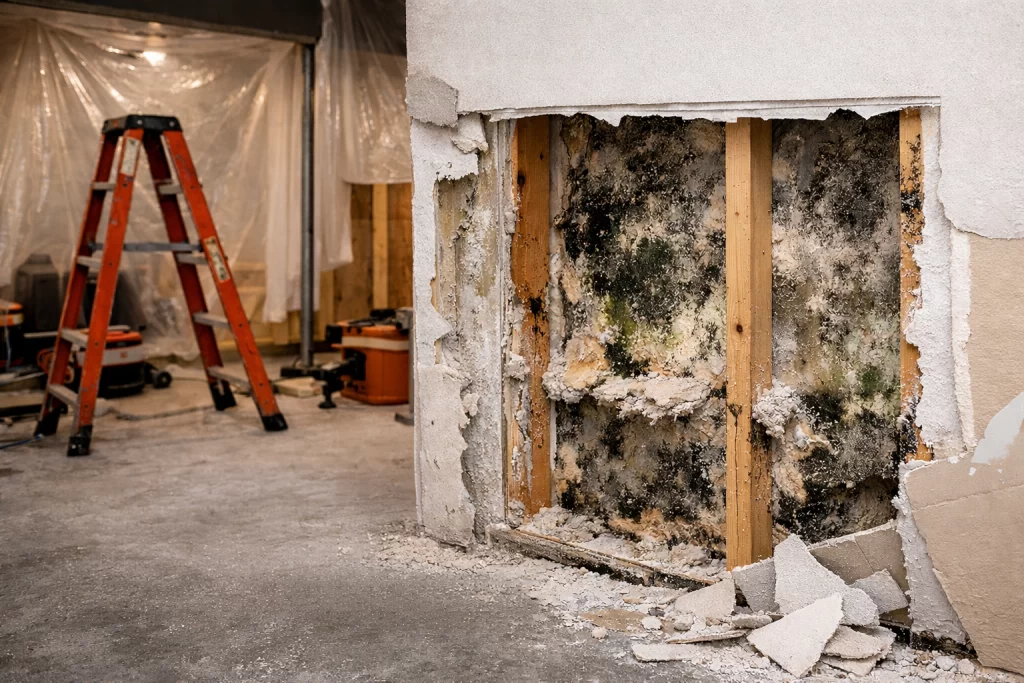
Mold after home renovations is a common issue in New Jersey homes, especially after remodeling projects that trap moisture. Home renovations are meant to improve comfort, value, and safety. However, in many New Jersey homes, renovation projects unintentionally create ideal conditions for mold growth. Mold after remodeling is far more common than most homeowners realize, especially in basements, bathrooms, kitchens, and finished attics.
At United Marvel Restoration, we regularly investigate mold problems that appear shortly after renovations are completed. In many cases, the work looks clean and professionally done on the surface, yet mold is actively growing behind walls, under flooring, or inside ceiling cavities. These issues are almost always tied to trapped moisture, inadequate ventilation, or building materials being sealed before they fully dried.
Why Home Renovations Increase Mold Risk
Renovations change the way air and moisture move through a home. In New Jersey’s climate, where humidity levels are often elevated year-round, even small moisture issues can turn into mold problems once construction begins.
Moisture trapped behind new materials
Drywall, lumber, insulation, adhesives, joint compound, and paint all introduce moisture during installation. When these materials are installed over slightly damp surfaces or enclosed too quickly, moisture becomes trapped inside wall cavities. Once sealed, that moisture has no path to escape, allowing mold spores to activate and spread unnoticed.
Reduced airflow during construction
During renovations, contractors often use plastic barriers, temporary walls, and sealed work zones to control dust. While necessary, these barriers reduce airflow and trap humidity. Without proper ventilation or dehumidification, moisture levels can rise quickly, especially in enclosed areas like basements and bathrooms.
Basement renovations without moisture correction
Basements are one of the most common locations for post renovation mold in New Jersey homes. Concrete and block foundations naturally release moisture through vapor transmission. Finishing a basement without first addressing humidity, condensation, or groundwater infiltration almost guarantees future mold growth behind framing, insulation, and drywall.
Bathroom and kitchen steam migration
New bathrooms and kitchens generate large amounts of moisture from showers, cooking, and dishwashers. If exhaust fans are undersized, improperly vented, or rarely used, steam and moisture migrate into surrounding walls and ceilings. Over time, this leads to mold growth behind tile, cabinets, and fixtures.
Common Areas Where Mold Appears After Remodeling
Post renovation mold is most often discovered in areas that appear brand new:
- Behind drywall in newly finished basements
- Inside bathroom walls near showers and tubs
- Beneath new flooring installed over damp subfloors
- In attics following insulation or ventilation upgrades
- Behind kitchen cabinets on exterior walls
Because these areas look clean and finished, mold often remains hidden until odors, staining, or health symptoms develop.
Early Warning Signs Homeowners Should Not Ignore
Mold growth after renovations does not always present visible damage right away. Homeowners should be alert for subtle signs, including:
- Persistent musty or earthy odors
- Rooms that feel damp or heavy despite heating or air conditioning
- Bubbling, peeling, or discolored paint
- New allergy or respiratory symptoms after construction
- Staining at baseboards, corners, or ceilings
These warning signs often indicate moisture and microbial activity behind finished surfaces.
How to Prevent Mold During and After Renovations
Preventing mold requires planning and moisture control throughout the renovation process:
- Allow framing, drywall, and subfloors to fully dry before enclosure
- Use proper ventilation and exhaust fans during construction
- Monitor and control indoor humidity levels
- Address basement moisture issues before finishing
- Avoid installing flooring or drywall over damp materials
Skipping these steps is one of the most common reasons mold develops after remodeling projects.
Why Mold After Renovations Is Frequently Missed
Homeowners rarely associate new construction with mold problems. Insurance claims related to renovation moisture are often denied because the damage is considered gradual rather than sudden. As a result, mold growth can continue unnoticed behind finished surfaces, increasing remediation costs and potential health concerns.
Early professional evaluation is critical. Identifying hidden mold early can prevent widespread contamination, unnecessary demolition, and long-term indoor air quality issues.
Professional Mold Remediation After Renovation Projects
When mold is discovered after a renovation, surface cleaning is not enough. Proper mold remediation requires containment, HEPA air filtration, removal of contaminated materials, and correction of the moisture source to prevent recurrence.
United Marvel Restoration provides professional mold remediation services throughout Monmouth County and surrounding New Jersey communities. Our approach focuses on identifying hidden mold, eliminating moisture at the source, and restoring homes safely and correctly according to industry standards.
If you recently completed a renovation and notice unusual odors, moisture issues, or health symptoms, early action can save time, money, and stress. Mold problems do not resolve on their own, and newly finished spaces can hide serious issues beneath the surface.