
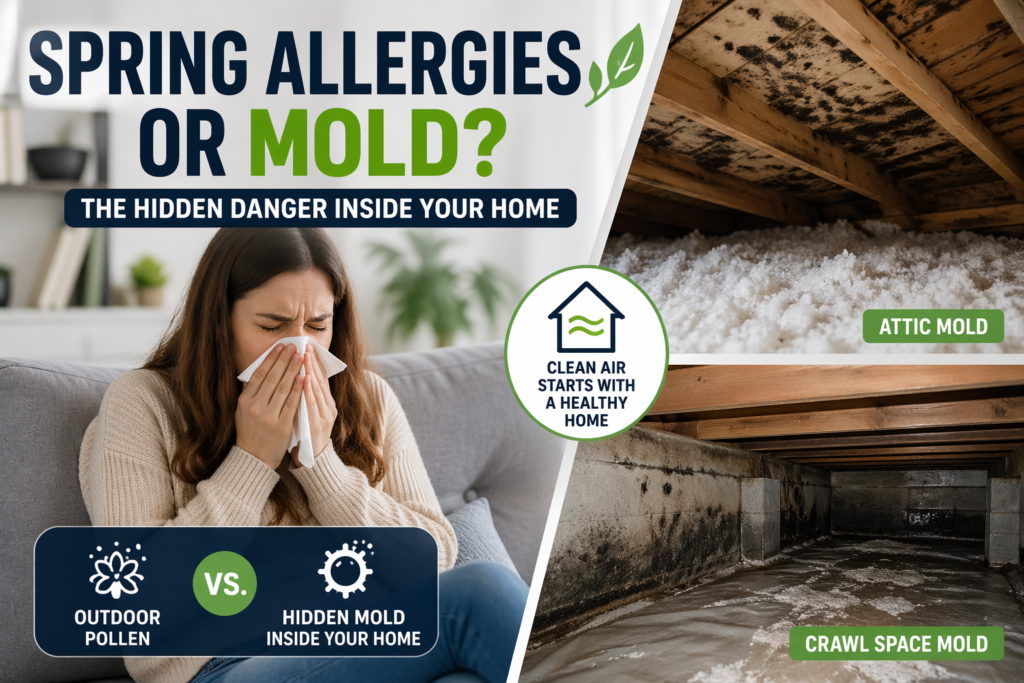
Spring allergies or mold? Many Monmouth County NJ homeowners aren’t sure what’s causing their symptoms.
But here’s the truth most homeowners overlook:
Your symptoms might not be coming from outside at all.
In many homes across Red Bank, Middletown, Rumson, and surrounding areas, the real problem is hidden mold growth inside attics and crawl spaces—quietly affecting your indoor air every single day.
Why Spring Weather Triggers Hidden Mold Problems
Spring in New Jersey brings a mix of rain, temperature swings, and humidity. That combination creates the perfect environment for mold growth—especially in areas you don’t see.
Attics and crawl spaces are the most common problem zones because:
- Warm air meets cold surfaces (condensation)
- Poor ventilation traps moisture
- Insulation holds dampness
- Humidity levels rise quickly
Once moisture builds up, mold doesn’t take long to grow.
The Connection Between Mold and “Allergy-Like” Symptoms
Here’s where it gets tricky.
Mold exposure often feels exactly like seasonal allergies. That’s why it goes unnoticed for so long.
Common signs of mold exposure include:
- Sneezing and sinus pressure
- Scratchy throat or coughing
- Headaches or fatigue
- Musty smells in certain areas of the home
- Symptoms that improve when you leave the house
If your symptoms feel worse indoors than outside, there’s a strong chance mold is involved.
How Mold Travels Through Your Home
Even if mold is growing in your attic or crawl space, it doesn’t stay there.
Air movement inside your home carries microscopic mold spores through:
- HVAC systems
- Ceiling penetrations
- Recessed lighting
- Ductwork and wall cavities
This means mold in one hidden area can affect the entire home’s air quality.
That’s why simply “cleaning what you see” is not enough.
Why Attics Are a Major Mold Hotspot in Monmouth County
Attic mold is extremely common in homes throughout Monmouth County NJ—especially after winter.
Here’s why:
- Warm indoor air rises into the attic
- Cold roof sheathing creates condensation
- Bathroom fans or vents sometimes discharge into the attic
- Limited airflow keeps moisture trapped
Over time, this leads to visible mold growth on wood sheathing, rafters, and insulation.
Crawl Spaces: The Moisture Trap Under Your Home
Crawl spaces are another major source of hidden mold.
Moisture enters from:
- Ground vapor
- Poor drainage around the foundation
- Humid outside air entering vents
Without proper treatment, mold can grow on:
- Floor joists
- Subflooring
- Support beams
- Foundation walls
And just like attics, that contamination can move upward into your living space.
Why Professional Mold Remediation Matters
Mold is not something you want to guess with.
A proper mold remediation process ensures:
- Containment to stop spread
- HEPA air filtration
- Deep cleaning of structural materials
- Safe removal of contaminated materials when needed
At United Marvel Restoration, we follow strict remediation protocols and provide honest, no-pressure assessments so homeowners know exactly what they’re dealing with.
Don’t Assume It’s Just Allergies
If your home smells musty or your symptoms don’t make sense, it’s worth taking a closer look.
Many homeowners in Monmouth County think they’re dealing with seasonal allergies—only to find out mold was the real issue all along.
The good news is, once properly addressed, the difference in air quality can be immediate.
Schedule a Free Mold Assessment Today
If you’re in Red Bank, Rumson, Middletown, Little Silver, Fair Haven, or surrounding areas and suspect mold in your attic or crawl space, United Marvel Restoration is here to help.
We offer free visual assessments and straightforward answers—no scare tactics, just real solutions.
📞 732-801-4714
🌐 www.unitedmarvelrestoration.com
How to Tell If It’s Mold or Allergies
- Symptoms worse inside your home
- Musty smells near vents or attic access
- Symptoms don’t improve with medication
- Visible discoloration or moisture issues