
Winter is one of the most active mold seasons in New Jersey homes, especially in the weeks following Christmas when heating systems run nonstop and houses remain tightly sealed against the cold. At United Marvel Restoration, we regularly discover hidden mold growth during this time of year in attics, basements, crawlspaces, and wall cavities where moisture quietly accumulates without obvious warning signs. While many homeowners associate mold with summer humidity, winter conditions often create the perfect environment for mold to grow unnoticed.
Why Mold Develops During Winter in New Jersey
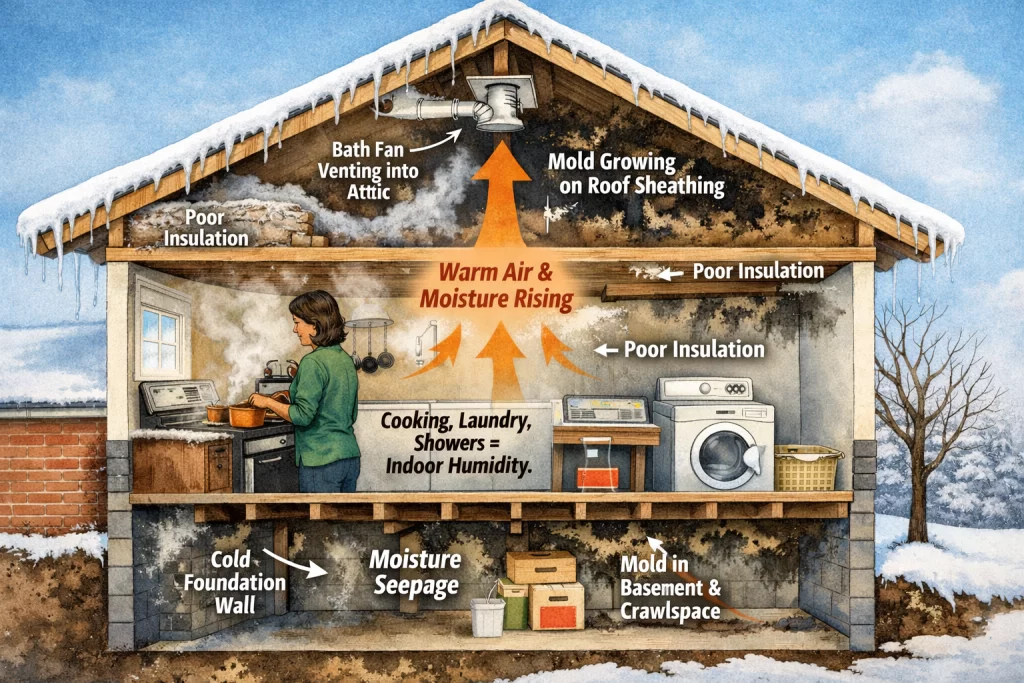
During cold months, indoor air holds moisture from everyday activities such as cooking, showering, laundry, and normal household living. Because homes are sealed for energy efficiency, that moisture has fewer escape paths. Warm air naturally rises and travels upward into attics and wall cavities where it meets cold surfaces like roof sheathing, rafters, nail heads, and exterior walls. When warm air contacts cold materials, condensation forms repeatedly, soaking porous building components over time. This ongoing moisture exposure allows mold to grow even when outdoor temperatures are freezing.
Common Winter Mold Locations in New Jersey Homes
Attics are one of the most frequent winter mold problem areas we see, especially in homes with blocked soffit vents, inadequate insulation, leaky attic hatches, recessed lighting penetrations, or bathroom fans that vent into the attic instead of outdoors. Basements and crawlspaces are also high-risk zones during winter because cold concrete walls create condensation when exposed to warm indoor air. Stored holiday decorations, cardboard boxes, wood framing, and dust provide organic material that mold feeds on once moisture is present.
Why Mold Often Goes Undetected Until Spring
Winter mold growth is often hidden because it develops slowly and out of sight. Many homeowners don’t enter their attic during winter and assume cold weather prevents mold activity. In reality, indoor temperatures remain within mold’s ideal growth range due to heating systems. By the time staining, odors, or air quality symptoms become noticeable, mold may already be well established and spreading beyond the original moisture source.
Why DIY Mold Treatments Don’t Solve Winter Mold
Surface treatments like bleach or store-bought sprays do not address the root cause of mold growth. These products may temporarily alter the appearance of staining but do not remove mold embedded in porous materials or stop moisture from returning. Without proper containment, disturbed mold can spread spores to unaffected areas of the home. Effective remediation requires identifying moisture pathways, isolating affected zones, controlling air movement, and treating or removing contaminated materials according to established industry protocols.
Why Winter Is the Best Time to Address Mold Problems
Winter is actually an ideal time to identify and correct mold issues because condensation patterns are consistent and easier to trace. Addressing mold now prevents spring humidity from accelerating growth and causing larger, more expensive remediation projects. Early intervention protects structural components, improves indoor air quality, and reduces the risk of recurring mold once warmer weather arrives.
Professional Mold Remediation by United Marvel Restoration
United Marvel Restoration provides professional mold remediation services throughout New Jersey using proven methods designed to stop mold at its source. Our process focuses on proper assessment, containment, air filtration, safe removal or treatment of affected materials, and long-term moisture control to prevent regrowth. Addressing winter mold early helps protect your home, your indoor air quality, and your long-term investment before the problem escalates.